


MATERIAL FAITH

Talia Sawiris in conversation with Georgina Sleap on art, Egypt and letting things take time.
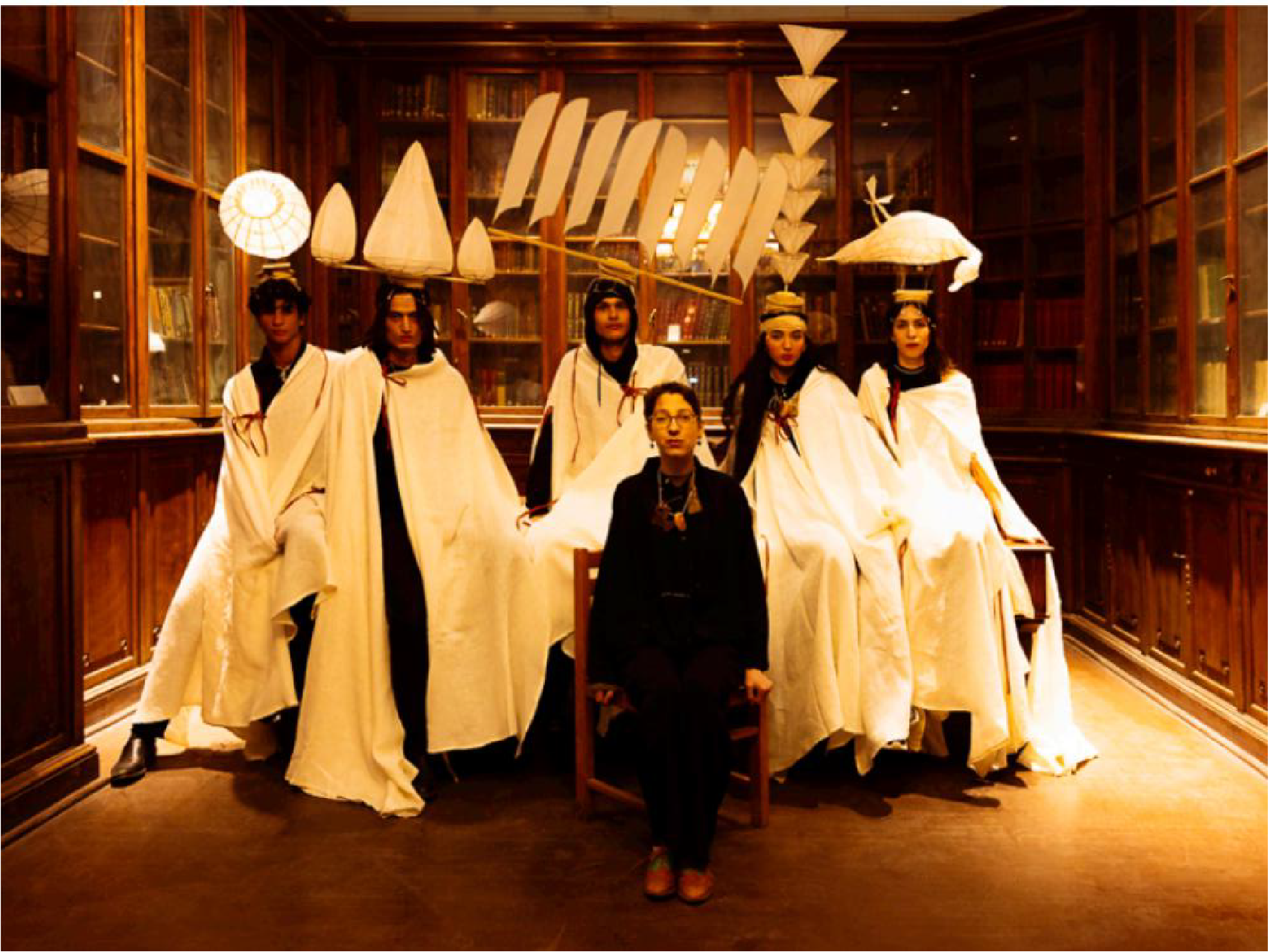
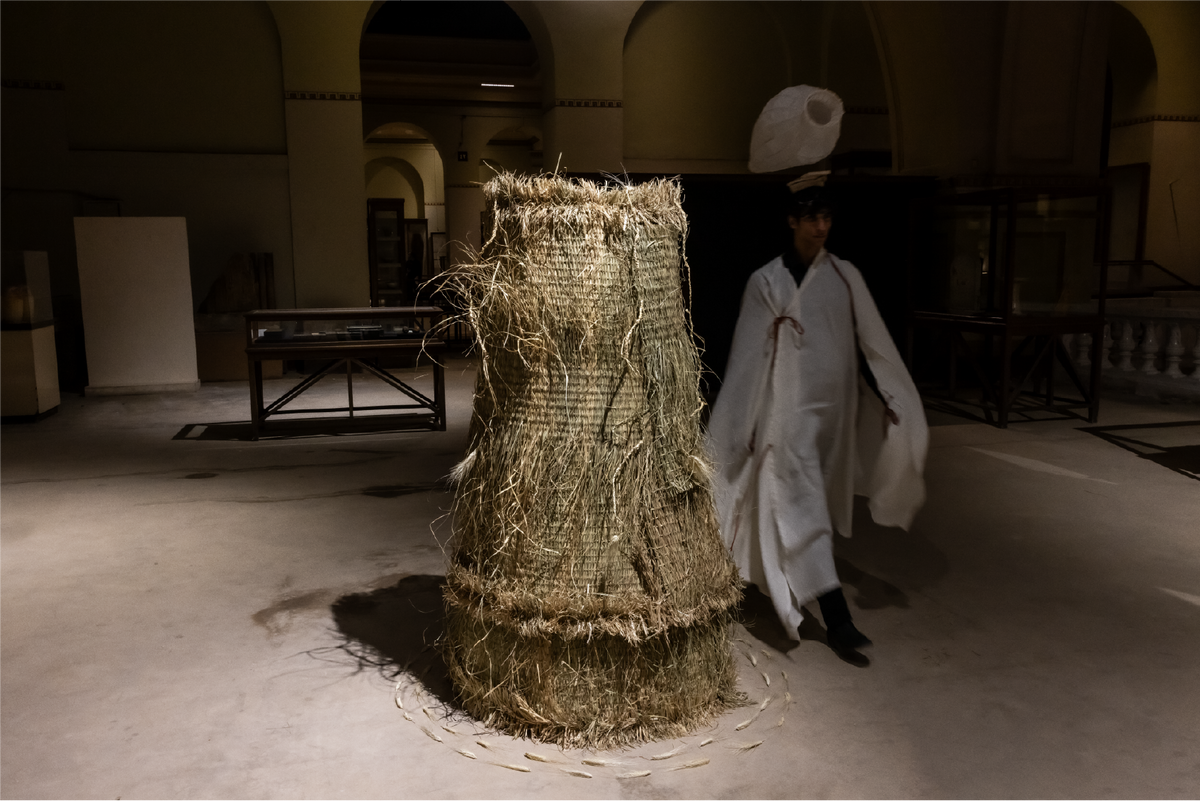
At the opening of Anūt, tall, slender figures dressed in white drifted slowly through stone and shadow. On their heads rested delicate constructions—plain white and almost without weight—made of bamboo, wire, and paper. One suggested an upside-down duck. Another rose nearly a meter high, as if gesturing upward toward the ceiling. The models had been instructed by Goya Gallagher, founder of Anūt, not to speak or engage with the guests, but to move silently through the crowd and the music. What emerged seemed to move beyond performance into something quieter and more affecting, bringing about a quality that was gently hypnotic.
The tender, fantastical works that translated a feeling of devotion, humor and balance, are not unlike Georgina Sleap, the Cairo-based British artist who was commissioned to make the sculptural headpieces by Anūt.
Sleap first arrived in Egypt five years ago to Fayoum, one of Egypt’s oldest cities, southwest of Cairo, driven out of Berlin by practical necessity. In Berlin, she conceived a series of dense papier-mâché sculptures—made from little more than newspaper and cheap glue—but as she began to work towards them, she realized that they “would never have dried” in her bitterly cold Berlin warehouse studio.
I met Sleap in a café in downtown Cairo, where over the course of two hours, it becomes clear that she places herself carefully and thoughtfully within the world she inhabits. “It's hard to separate the place, the time, your personality from where you are in your life”.
This attentiveness seems to guide everything she does. Sleap is unlike anyone I have met. Her interior world is rich and captivating, yet held together with deep tenderness. Our conversation slipped easily between Buddhist text, Christian thought, Greco-Roman art, and fiction, which invite profound reflections of her work and life more generally. Yet our conversation is grounded in and colored by gentle, comparative stories of encounters that have shaped her life - from an eighty year old neighbor Iris in London, to her downstairs neighbor Umm Sabah, with whom she has shared iftar with every evening this Ramadan. “I feel very loved there,” Sleap said of her neighbourhood. “But it’s a funny sort of love, isn’t it? Because it's love without understanding.”
That tension between intimacy and distance, belonging and not-quite-belonging seems to be something she accepts rather than resolves.
It is perhaps this gentle sense of submission to life and art that guides Sleap’s profound humility. It may be touched by anxiety, but it is driven, more than anything, by devotion and care—to her work, and to the conditions that allow it to exist. Few artists would move to Egypt on the strength of an idea for a papier-mâché sculpture. Fewer still would stay.
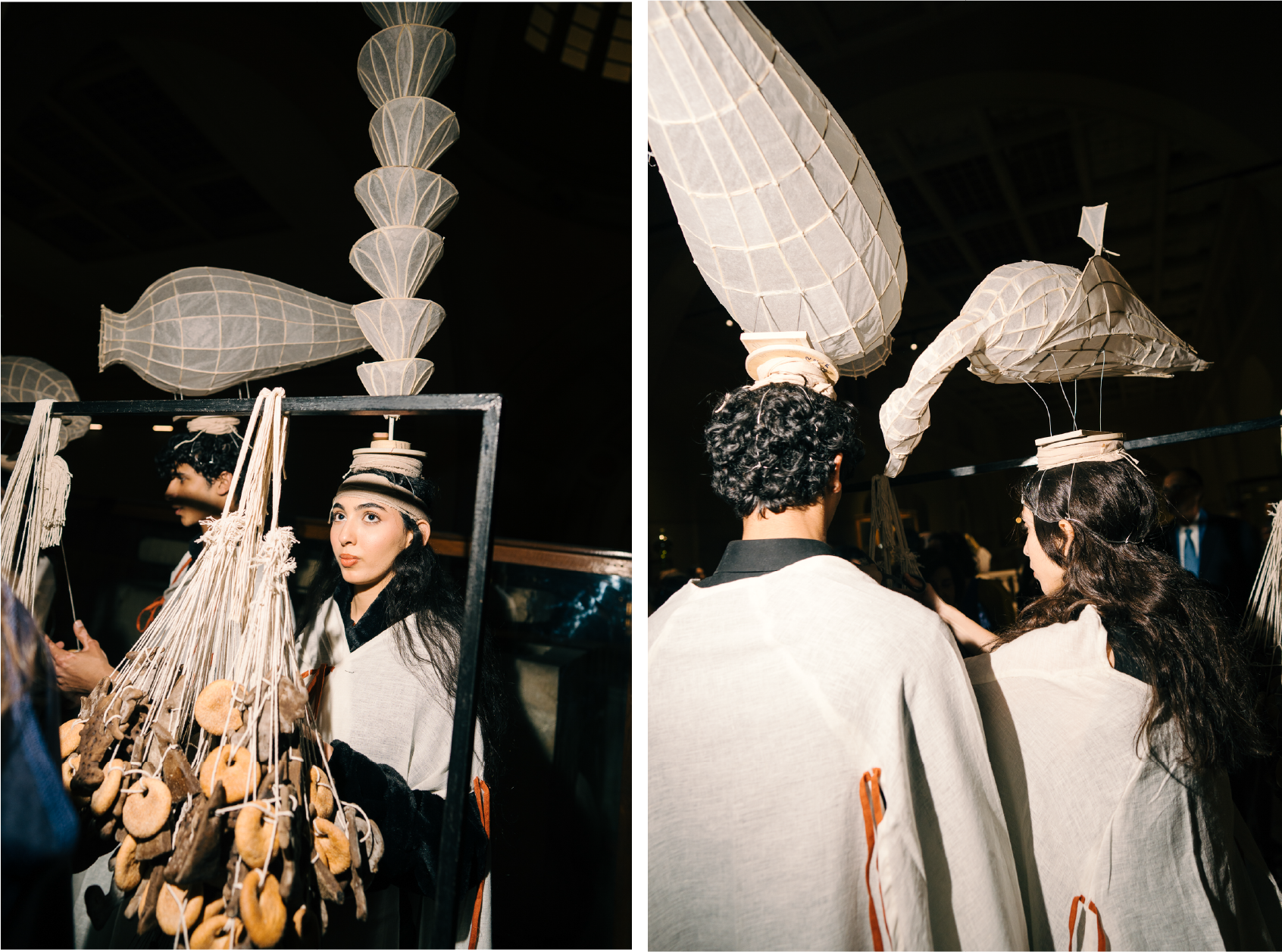
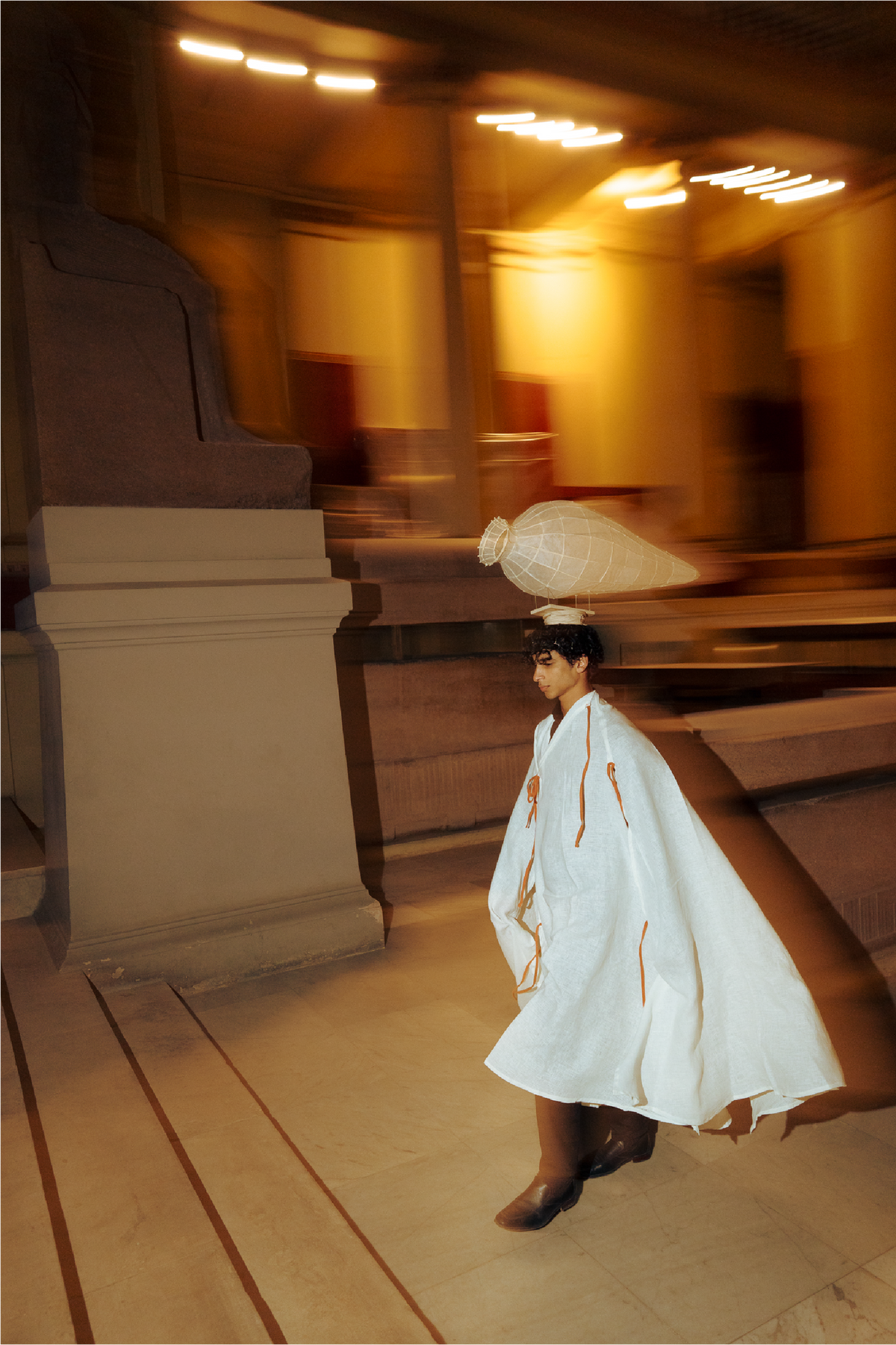
Sleap does not seek to exert control over her creations, but rather allows for materials to guide her. It is a change in her practice she attributes, in part to her new home – “in a funny way, I think the biggest thing [that’s changed since moving to Egypt] is having faith. But I think it’s a combination of Egypt and growing up and getting better”.
There is a sense of openness and spontaneity that runs through her work. She recalled rushing to 4D Models in London just weeks before the Anūt opening, gathering materials she thought she might need, while already suspecting that Cairo would offer better answers. “Have faith,” she remembered thinking. “You’ll be able to find what you need in Ataba.”
That faith proved well placed. It was through sourcing materials that she came to know Ataba, and this closeness shaped her decision to live in Faggala. “People kept saying, ‘You’re a foreigner, you should live in Zamalek,’” she said. “I am probably the only white woman in Ataba”. But Faggala was affordable, near the markets, and linguistically demanding. “It’s been a really good place to try and learn Arabic,” she added, “but mainly, it’s really close to Ataba.”
Within a ten-minute walk, she knows the wood workshops, welders, and sellers of wool, cotton, and glass. “My Arabic is still pretty shit,” she said, laughing, “and I’m still not very at home in lots of ways. But I do know Ataba. I know where to get stuff. I know how to find people to work with.”
She told me about a welder who promised to finish a piece one morning. When she returned that evening, it was still untouched. He was, she says laughing, “massively off his face, stoned.” Sleap can weld herself. “So I was like, please, let me just do it. I need it.” He agreed. She is now welcome to use the workshop whenever she wants—referring to herself, affectionately, as “the weird woman who can weld.”
“In England,” she reflected, “I’d have had to book a session at the London Sculpture Workshop—for like forty pounds in two hours.”
Here, she said simply, “everything is an adventure.” Egypt, for Sleap, was never meant to be permanent. When she first arrived, she imagined staying four to six months—long enough to make a body of work. Five years later, she is still here.
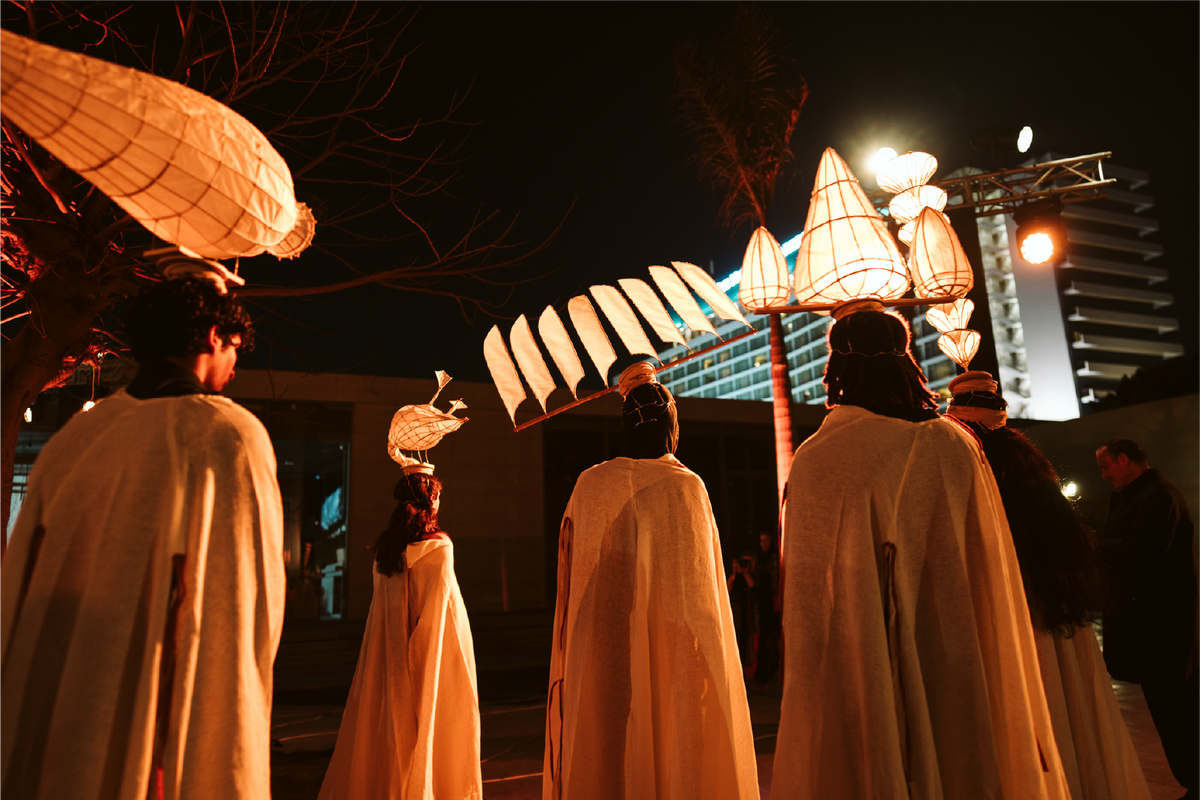
Egypt, she feels, has given her the conditions for this way of working. “I haven’t felt much pressure,” she said. “I’ve kind of gotten sucked into this pond that is my studio for the last five years.”
Collaborating with Anūt marked a shift. It was her first time working with a brand, and it brought with it a different rhythm—shorter timelines and a sense of movement she was no longer used to. “Now,” she said, “when Anut asks me to do something in a couple of months or I’ve been offered an exhibition in a year and a half…it’s quite a long time, but for me, it feels like a very small amount of time.”
She speaks warmly of working with Cruz, of her eye, her sensitivity to materials, her patience. “She’s really clever,” Sleap said. “She didn’t mind if I sent her stuff.” The ease of that exchange mattered to her.
Invitations are arriving more frequently now and her work will soon travel. “Egypt has given me all of that,” she said generously.
But what remains constant is her way of working: staying close to materials, trusting process, letting things take the time they need.
For now, that seems enough.